
Most teenage prodigies are designed to burn out before their second world tour. It’s been over a decade since “Animals” shook the foundations of Spinnin’ Records [Hilversum, Netherlands] in June 2013, yet martin garrix [Amsterdam, Netherlands], the producer who redefined the big-room sound, remains a singular figure who refused to let the industry’s pop-EDM machine dilute his technical integrity. We’ve all felt the fatigue of a mainstage scene cluttered with generic, ghost-produced filler that prioritises social media metrics over actual sonic innovation.
You probably recognise that distinguishing between manufactured hype and real technical skill has never been more difficult. This editorial analysis explores how the Amsterdam-born producer transitioned from a viral phenomenon into a vital pillar of the global electronic music industry. We’ll examine his 2026 production techniques and his influence as the head of STMPD RCRDS [Amsterdam, Netherlands], an ecosystem currently fostering credible new talent like Mesto [Amstelveen, Netherlands], a producer known for his highly technical future bounce sound.
Key Takeaways
- Trace the trajectory of the Dutch producer as he transitions from the ‘Animals’ era to a more nuanced, genre-blending identity.
- Discover how STMPD RCRDS (Amsterdam) operates as a talent incubator, prioritising house and tech-house diversity over commercial chart success.
- Examine the technical evolution of the martin garrix 2026 live setup, focusing on hardware integration and a shift toward improvisational performance.
- Understand the role of bespoke visual software in creating a reactive, human-centric atmosphere that moves beyond pre-programmed show files.
- Gain insight into how a veteran presence is maintained in the late twenties by valuing curation and artistic legacy over temporary industry hype.
The enduring legacy of Martin Garrix in the 2026 landscape
Martin garrix remains the primary architect of the global festival circuit in 2026, holding a position as a seasoned veteran whilst still in his late twenties. He’s successfully transitioned from the explosive energy of the ‘Animals’ era into a period of calculated, sophisticated production. A decade of headlining sets has refined his ability to command massive crowds without relying on the frantic tropes that defined early EDM.
Much of Martin Garrix’s career has been defined by his commitment to the Amsterdam scene and his role as a global ambassador for Dutch electronic music. We’ve observed his 2026 residency at Ushuaïa (Ibiza), the world-renowned open-air venue that has hosted his summer sessions since 2015, become the industry benchmark for mainstage consistency. This longevity in the Balearic circuit proves that his melodic big-room sound has evolved into a permanent fixture of the island’s nightlife culture.
To better understand the technical foundations of his production style, watch this look inside his studio process:
Open the player here. This connects to YouTube. Nothing plays automatically.
Breaking the ‘teenage phenomenon’ stereotype
The 2026 sonic identity
His current sound blends the driving energy of his roots with organic textures and hardware-driven synthesis, exemplified by his recent collaborations with underground-leaning producers. He’s moved away from digital perfection toward a raw, more tactile aesthetic that resonates with a more mature clubbing demographic. This shift ensures his music feels as relevant in a dark warehouse as it does on a sun-drenched festival stage, bridging the gap between mainstream appeal and credible club culture.
Curation over hype: The STMPD RCRDS philosophy
Martin Garrix launched STMPD RCRDS (Amsterdam) in 2016 as a vehicle for creative autonomy. By 2026, the imprint has moved beyond its initial identity as a vanity project. It now functions as a vital incubator for electronic music that prioritises the human element of curation. This approach stands in direct opposition to the data-driven models used by corporate labels.
The label’s physical heart is the STMPD Studios complex in Amsterdam. This facility provides a communal space where established names and newcomers share technical knowledge. It fosters a specific sonic identity that values precision over viral trends. The 2026 roster reflects a broader shift towards diversity in the scene:
- A move towards sophisticated tech-house and minimal club textures.
- Collaborative studio sessions that blend disparate sub-genres.
- A rejection of the ‘fast-music’ culture prevalent on major streaming platforms.
This commitment to quality extends to the live show and technical evolution of the label’s artists. Every release is treated as a piece of a larger performance narrative rather than just a digital file for an algorithm.
Nurturing the next generation
Artists like Julian Jordan (Apeldoorn), a long-time collaborator, have demonstrated significant technical growth under this model. Jordan has successfully pivoted from aggressive big-room sounds to a more nuanced, groove-focused style. The ‘STMPD RCRDS & Friends’ stages at festivals like Tomorrowland offer these artists a global platform. These takeovers allow martin garrix to showcase raw talent without the gatekeeping of traditional booking agencies.
In a similar effort to empower creators, those seeking professional resources and 24/7 exposure can visit NAYA Music Radio, a platform dedicated to supporting both emerging and established artists.
The business of independent electronic music
Staying independent allows the label to value long-term artist development over immediate commercial returns. This 2026 model serves as a blueprint for artist-led imprints. It proves that creative freedom and commercial viability can coexist when curation is led by passion. You can hear the results of this human-first philosophy on the Doubleclap Radio app, where we celebrate the craft behind the decks.
Analysing the 2026 live show and technical evolution
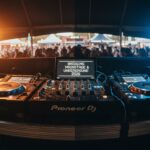
The 2026 stage design marks a departure from the pyrotechnic-heavy displays of the previous decade. Martin Garrix now utilises a bespoke interface developed alongside Gabe Fraboni, the Los Angeles-based creative director who has sculpted the artist’s visual identity since 2016. This setup moves beyond simple MIDI triggers, employing a multi-deck system that allows for genuine improvisation. We observed this during his recent residency at Ushuaïa Ibiza, where the transition from 128 BPM house to more experimental breaks felt reactive rather than programmed.
- Integration of real-time generative software that responds to audio frequencies.
- A four-deck CDJ-3000 setup allowing for live layering of stems and loops.
- Minimalist LED architecture that prioritises depth and shadow over raw brightness.
The ‘Sentio’ legacy and beyond
The technical trajectory from his 2022 debut club album to his current output shows a move toward sonic complexity, with 2026 sets featuring a 60/40 split between unreleased STMPD RCRDS IDs and reworked classics. While Martin Garrix’s crossover success cemented his place in the global pop charts, his current live strategy focuses on the visceral grit of the dancefloor. The 2026 setlist balances the high-pressure energy of stadium anthems with the stripped-back textures of underground house.
Human curation in a digital age
Audiences in 2026 are increasingly cynical of automated performances. There’s a tangible demand for the spontaneous selection and “human touch” that defined early rave culture. This shift reflects a wider movement where listeners reject algorithmic playlists in favour of expert ears. Doubleclap Radio champions this same ethos through live DJ sessions, proving that the most resonant musical experiences come from people, not processors. Download the Doubleclap app to stay connected to this authentic, human-led sound.
Navigating the High-Fidelity Future of the Mainstage
Martin Garrix [Amstelveen, Netherlands], the multi-award-winning producer and founder of the influential STMPD RCRDS imprint (Resident Advisor), has successfully transitioned from a teenage phenomenon to a calculated architect of the modern festival landscape. By 2026, his commitment to technical precision and rigorous A&R standards has established a new benchmark for big-room consistency. This era isn’t defined by the fleeting trends of social media, but by the tangible evolution of stage architecture and a refined approach to track selection that respects the audience’s intelligence. It’s a testament to how a global headliner can maintain relevance by prioritising the craft of performance over the noise of the industry.
Whilst the spectacle of the mainstage continues to expand, the soul of the genre remains rooted in the human element of discovery. Our collective of Helsinki-based underground experts at Doubleclap Radio [Helsinki, Finland] understands that real connection comes from curation, not code. We broadcast live from the heart of the Nordic scene, ensuring there are no algorithms, just real DJs sharing the music they love. You can experience human-curated electronic music 24/7 on the Doubleclap Radio app and join a community that values the raw, unpolished energy of the underground. The dancefloor is waiting.
Martin Garrix: Frequently Asked Questions
What is Martin Garrix’s most significant contribution to electronic music in 2026?
Martin Garrix (Amstelveen, NL), the Dutch producer who redefined the big room sound, is currently leading the integration of spatial audio in stadium environments. In 2026, his live shows utilised 48-channel immersive sound arrays to create a 360-degree listening experience for the audience. This technical shift moves the industry away from traditional stereo PA systems, prioritising acoustic precision over standard festival pyrotechnics.
How does STMPD RCRDS differ from other major electronic music labels?
STMPD RCRDS (Amsterdam, NL) is an independent record label founded in 2016 to provide a creative platform for diverse electronic music talent. It functions as an artist-led incubator that offers 50/50 profit splits, unlike the restrictive contracts of major imprints like Spinnin’ Records (Hilversum, NL), a label instrumental in the global explosion of EDM. By 2026, STMPD maintained a consistent output of 100 releases per year.
Is Martin Garrix still performing at major festivals like Ultra and Tomorrowland in 2026?
The 2026 festival season sees the artist return to headline slots at Ultra Music Festival (Miami, US), a premier outdoor electronic music event, and Tomorrowland (Boom, BE), one of the world’s largest electronic music festivals. Having performed at these events annually since 2014, his 2026 sets are designed to showcase the technical evolution of the Dutch progressive house sound. These performances continue to draw crowds exceeding 60,000 people.
What production software and hardware does Martin Garrix use for his 2026 releases?
For his 2026 studio sessions, Martin Garrix (Amstelveen, NL), a producer known for his technical precision, relies on FL Studio 24 as his primary digital audio workstation. He complements this with Genelec 8361A monitors for critical listening and uses the Teenage Engineering OP-1 Field for mobile sequencing. His hardware chain includes the Neve 1073 preamp and the SSL G-Series Bus Compressor to provide analogue texture to his digital compositions.